

July 2026
Breaking down the benefits of Omega-3s
Omega-3s are a hot topic the past several years and are commonly referenced in health discussions. But what are they and why should we include them in our diets? Let’s break it down for you.
Omega-3s are fatty acids from a specific group of polyunsaturated fatty acids also called PUFAs. There are a wide range of fatty acids, however the main Omega-3 fatty acids that are of particular interest are:
- ALA (α-linolenic acid) which are short chain fatty acids
- EPA (eicosapentaenoic acid) long chain fatty acids
- DHA (docasahexaenoic acid) long chain fatty acids
Of these Omega-3 fatty acids, only ALA is classified as an essential fatty acid as our human body cannot produce this form of fatty acid from existing precursors so it must come directly from our diet. The premise is not to debate the value of any of the three Omega-3 fatty acids noted but to emphasize the importance to the human body as well as for livestock.
There are four (4) main traits to ALA Omega-3 fatty acids.
-
-
- They convert to longer-chained Omega-3s like EPA and DHA within the body at different rates, depending on physiological needs.
- They represent a key source of healthy dietary energy
- They can be stored in tissues and mobilized for energy or for EPA and DHA production as needed.
- ALA and Omega-3 are anti-inflammatory PUFA and present numerous health related opportunities.
-
Why are Omega-3s important?
Typical diets consist of high amounts of Omega-6s, another polyunsaturated fatty acid – but one that is Inflammatory. The issue is imbalance: Omega-6s far outweigh the Omega-3s in the average diet. In fact, the Omega-6 to Omega-3 balance from studies show the average North American is consuming a diet that is around to 20:1. That balance should be closer to 4:1 and hence the anti-inflammatory nature of our diets and the negative inflammatory health effects and the opportunity to improve.
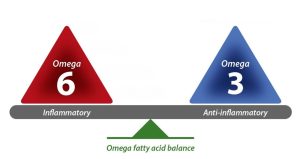 We can trace some of this imbalance back to the food processing revolution of the 1960-1970’s, as North America moved toward industrialized, centralized, high yield agriculture and shelf-stable processed foods.
Omega-3s compete with Omega-6 fats for the same enzymes in the body, as well as positions in cell membranes so too much dietary Omega-6 can interfere with Omega-3 metabolism. This Omega-6 imbalance leads to obesity, cardiovascular disease, Alzheimer, non-alcoholic fatty liver disease and inflammation, among other conditions.
Omega-3s work the other way.
The benefits of Omega-3s to humans
Omega-3’s benefits are numerous with a wide range of potential health benefits, including reduced inflammation, supporting cardiovascular health, improving cognitive function, and strengthening the immune system.

Support Heart Health

Improve Eye and Vision Health

Alleviate Symptoms of IBS an Crohn’s Disease

Boost Brain Function and Mental Clarity

Enhance Immune System Function

Promote Healthy Skin and Hair

Reduce Inflammation

Supporting Joint and Bone Health

Reduce the Risk of Chronic Conditions Such as Heart Disease and Arthritis
So how do we incorporate a more balanced Omega-3 diet into our food?
An opportunity to improve this imbalance can start with what we feed our livestock. Livestock – cows (beef and dairy), chicken, egg-layers – can achieve an Omega-3 boost in their meat, milk or eggs by increasing the percentage of specific feed ingredients. One such Omega-3-rich feed ingredient source is linPRO. linPRO’s formulation includes one of the world’s oldest and healthiest ingredients – linseed/flaxseed. And because of this inclusion of flaxseed into linPRO, it is an excellent source of ALA Omega-3 fatty acid.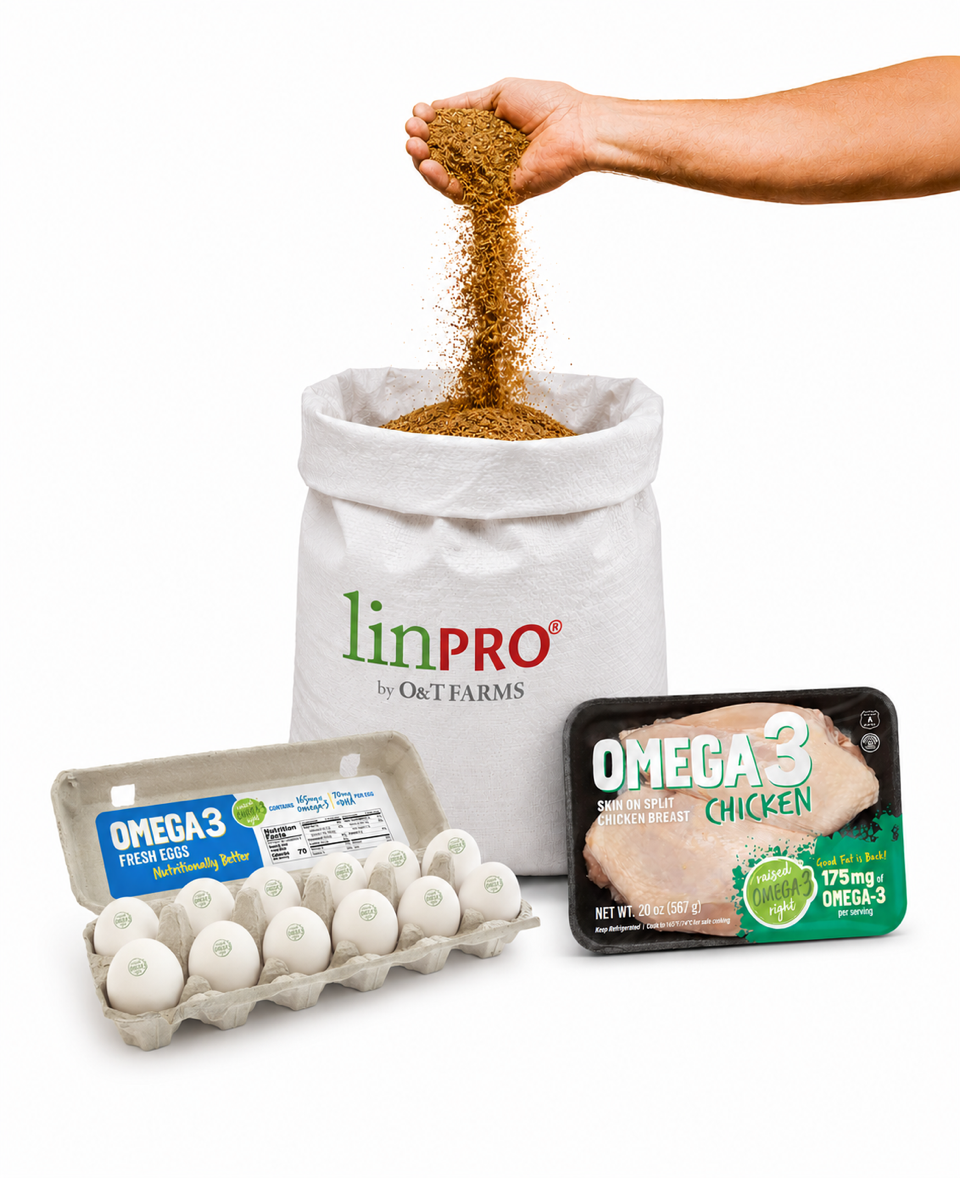
linPRO is made through an advanced patented technology by O&T Farms and was purposely developed for their own egg laying operation. While flaxseed brings a high volume of Omega-3 anti-inflammatory benefits, its usefulness in its raw (whole seed) format is limited. The hard outer shell of the flaxseed serves a purpose, to protect the unstable (highly oxidative) PUFA Omega-3 fat/oil – but that same shell makes the whole seed difficult to consume and digest. In fact, in its raw format the flaxseed carries anti-nutritional effects and under certain conditions can generate HCN (Hydrocyanic Acid), which which is a food safety consideration in raw, unprocessed flaxseed.
Through O&T Farms patented process, these anti-nutritional effects are removed and linPRO becomes safe, stable and is highly digestible and palatable. Incorporating flaxseed into livestock diets via linPRO, we can boost the Omega-3 levels naturally in eggs, milk or meat while also improve the livestock’s health and performance. This widens the options for processors and retailers to provide Omega-3 eggs, Omega-3 enriched chicken, turkey, beef, pork and dairy products.
What are the benefits of Omega-3’s
Benefits to livestock above the enrichment to food include such things as:
- Optimized immunity
- Maximized reproduction
- Reduced inflammatory conditions
- Improved resiliency to heat stress
- Increased productivity
- Mortality reductions
Specifically, studies done at the Guelph University incorporating linPRO have shown the benefits to broiler breeder hens improving the health and resilience of their progeny with increased body weight (BW) and reduced feed consumption (FCR) for the progeny. While similar studies on dairy cows done at Penn State and UC Davis CA, using linPRO-R have shown reduced somatic cell counts (SCC) reduced mastitis incidents and improved conception. Health and reproduction performance benefits continue to be discussed, researched and seen throughout the dairy industry.
Feeding livestock this high Omega-3 source from linPRO also achieves healthy benefits that trickle down the food chain. So, humans can have have the ability to access nutritionally better and naturally enriched Omega-3 foods we already consume every day. This is bringing the Omega-6:Omega-3 balance back to our plates, all while still enjoying every day functional foods, we’re familiar with and enjoy already.
This is the halo of goodness!

Healthy Feed – Healthy Animals – Healthy Food