O&T Farms Research at Work

Investing in Research and Development

O&T Farms Products are Supported Through Third-Party Research

Our products and their ability to support either health or wellness improvements for livestock or Omega-3 enrichment into functional foods undergo extensive independent research. We ensure that research is done to support the marketing or advancement of commercialization.

Our commitment to research and development is supported by independent third-party institutions, such as Penn State University, UC Davis California, Fresno State, University of Florida, University of Guelph, Nielsen’s and The University of Saskatchewan.

Professional

Authoritative

Credible

  • Categories

  • Sort by

php
Although advanced genetics, nutrition and management have led to increased efficiency in breeder hen production, breeder hens are still often afflicted by physiological and metabolic disorders ...Read More ❯

php
The 2020 Penn State Dairy Cattle Workshop featured Dr. Troy Ott explaining the benefits of an Omega-3 feeding strategy for transition cows. ...Read More ❯

php
The modern global dairy market rewards herds with optimized reproductive performance and reduced herd turnover rates. ...Read More ❯

php
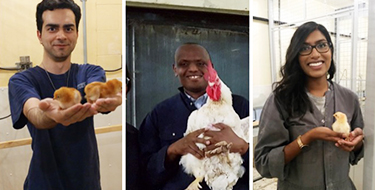
Breeder feeding strategies including linPRO show promise for improving skeletal integrity of pullets. ...Read More ❯
php
Developmental programming has the greatest application potential for modern chicken production to help meet changing and growing global market demands. ...Read More ❯

php
Over the past decade, the benefits of linPRO-R for dairy cattle health and milk production have been demonstrated in controlled research trials; however, commercial data was lacking….until now! ...Read More ❯

php
O&T Farms collaborated with the University of Saskatchewan and the Saskatchewan Food Industry Development Centre in a multi-disciplinary research project to evaluate the effects of feeding linPRO-R to dairy cattle on the fatty acid profile and sensory characteristics of havarti cheese. ...Read More ❯
php
Developmental programming has the greatest application potential for modern chicken production to help meet changing and growing global market demands.The concept of developmental programing refers to the ability of specific exposures during pre- and early life to result in epigenetic changes that may impact the development, health and production potential ...Read More ❯
php
Amino Acid Digestibility and Apparent Metabolisable Energy of linPRO offers Improved Nutritional Precision for Laying Hens ...Read More ❯
php
Animal Scientists from the University of Saskatchewan find that supplementing dairy cow rations with linPRO-R is an effective strategy for increasing the concentration of omega-3 fatty acids in milk while maintaining animal performance. ...Read More ❯
php
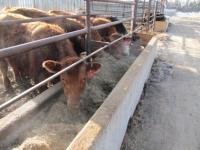
The Agriculture and Agri-Food Canada Lacombe Research and Development Centre research feedlot feeding strategies desigened to improve the nutritional value of beef products for consumers. ...Read More ❯
php
Authors: P.A. Thacker, B.P. Willing & V.J. Racz (University of Saskatchewan) ...Read More ❯

Recent Posts

Our Collaborative Research Partners:

fresno-state-logo-r-horizontal
unh_logo_ls_b_rgb_no r
Share:

Jul 2024

(Published Manuscript)

Introduction

Although advanced genetics, nutrition and management have led to increased efficiency in broiler chicken production, they are still often afflicted by physiological and metabolic disorders which lead to economic losses for producers. As genetic advancements increase production efficiency and lead to a shorter life to slaughter timeframe, the embryonic and immediate post-hatch time period become critical for production viability of broilers.

Drs. Aizwarya Thanabalan and Elijah G. Kiarie

The breeder hen’s diet supplies nutrients to the hatching egg which is critical for embryonic development. Specifically, energy and essential polyunsaturated fatty acids (PUFA), such as linoleic (LA) and α-linolenic (ALA), supplied by the egg act as critical nutrient sources during embryogenesis and early post-hatch.  Supplied through the breeder hen’s diet, ALA, provides longer chain omega-3 polyunsaturated fatty acids (n3-PUFA). Consequently, there is vast potential for improvements to production and health through the nutritional supplementation of n3-PUFA in breeder hen diets. In addition, due to increased public pressure to limit usage of antimicrobial growth promoters (AGP), research efforts have focused on identifying specialty feed additives to act as alternatives to AGP in reducing disease in broiler chicken production.

However, there is still a knowledge gap regarding breeder hen nutrition, specifically the impact of n3-PUFA in breeder hen diets and its impact on progeny performance, health and welfare.

Objectives

University of Guelph research investigated the impact of supplementing Omega-3 polyunsaturated (PUFA) fatty acids in the broiler breeder hen diet on progeny performance.

Experiment

The experiment was conducted at the Arkell Poultry Research Station, University of Guelph (Guelph, ON, Canada). Five hundred and eighty-eight pullets and 60 cockerels (Ross 708) were sourced from Aviagen (Aviagen Inc., Huntsville, AL, USA). The pullets and cockerels were floor raised and grouped based on the assigned rearing and laying diet.

epigenetic-omega-3-broiler-breeder-progeny

Starting at 23 weeks of age Breeders (rearing and laying) were allocated to dietary treatments: (1) control (CON); (2) CON + 1% Microalgae (Aurantiochytrium limacinum) fermentation product, DHA source diet (DMA); or (3) CON + 2.5% co-extruded full-fat flaxseed and pulse mixture (50/50, wt/wt; linPRO, O&T Farms), ALA source diet (linPRO). Chicks (Progeny) were hatched from eggs collected from the breeder hens at 34, 44 and 54 weeks of age, and were raised in metabolic cages within their breeder treatment groups. Progeny from CON breeders remained in CON and progeny from DMA and linPRO breeders were divided into post hatch treatments with the 5 post-hatch (progeny) treatments being CON-CON, DMA-CON, linPRO-CON, DMA-DMA and linPRO-linPRO. Diets for progeny were formulated as 2-phase: starter (d 1-10) and grower/finisher (d 11-42). Health and performance of progeny was followed from hatch to d-42, with chicks being challenged with Eimeria culture on d-10 post hatch. Chemical analyses was performed on the diets to determine nutrient concentration (dry matter, crude protein and crude fat) and diets 2 and 3 were formulated to provide similar n-3 and n-6 ratios. Measurements throughout the experiment included live bodyweight, intestinal lesions, tibia and organ weight (liver, spleen, bursa, and breast), blood immunoglobulin A (IgA) in the progeny, and fatty acids concentration in the hatching eggs.

Implications

Research into the impact of Omega-3 feed ingredients on breeder hens and their progeny is critical for industry progress. Results from the research show that breeder hen nutrition and the successive feeding of linPRO can influence the long-term health and welfare of progeny. Compared to CON, both DMA and the linPRO feeding program increased n-3 PUFA concentration in hatching eggs and progeny diets. During the starter phase DMA and linPRO diets improved feed conversion ratio compared to CON.

epigenetic-study-news-feed-conversion-broiler-breeder-omega3

Including linPRO in diet improved FCR

progeny-epigenetics-health-omega3-study-news-body-weight

Progeny of linPRO breeder hens had higher body weight 

When compared to DMA, feeding linPRO to breeder hens and their progeny increased the breast weight of progeny.
progeny-breeder-broiler-health-omega3-epigenetic-study-news-breast-weight

Successive feeding of linPRO increased breast weight in progeny.

No differences were observed in duodenum lesions scores, organ weight or plasma IgA between diets but successive DMA exposure led to increased jejunum lesion scores compared to control and linPRO fed birds.

Key Takeaways

omega3-benefits-health-progeny-epigenetics

Acknowledgements

O&T Farms thanks Drs. Aizwarya Thanabalan and Elijah G. Kiarie. The published research paper in Poultry Science can be read in its entirety by clicking the button below. Significance of successive feeding of sources of n-3 fatty acids to breeder hens and their progeny on growth performance, intestinal lesion scores, lymphoid organs weight and plasma immunoglobulin A in broiler chickens challenged with Eimeria. (2024). Poultry Science 103: 1-12

Share:

Nov 2020

The 2020 Penn State Dairy Cattle Workshop featured Dr. Troy Ott explaining the benefits of an Omega-3 feeding strategy for transition cows.

Dr. Troy Otts November 12, 2020 presentation details Omega-3 fatty acid supplementation and the effects on reproduction and immune functions.  The premise of the first part of the presentation is that fats are not all equal when discussing dairy rations during the transition period.  The transition period is stressful and negative energy and immunity are key criteria that need to be considered.  Parametric costs of fat are further explored to understand the imbalance between O6:O3 fat sources in dairy diets.  The fact that most fat sources are inflammatory is discussed at length and then digs into how to balance inflammatory and anti-inflamatory fat sources.  The presentation is an in-depth analysis of the various unsaturated and saturated fat sources and specifically the anti-inflammatory Omega-3 polyunsaturated fatty acids and their benefits during the stressful transition period.

Alpha-linolenic (ALA) Omega-3 fats are reviewed and explained; as essential fat sources because they cannot be synthesized by the cow/mammal and must be part of their dietary intake.  Further discussion goes on to identify flaxseed as one of the richest sources of essential ALA Omega-3 fats. Flaxseed as a polyunstatureated fat source when left unprotected and introduced to the rumen will cause biohydrogenation, however this is not discussed in the presentation.  The biohydrogenation issue caused by raw flaxseed oil is ultimately one of the key benefits of linPRO-R in dairy rations.  The linPRO-R manufacturing process, creates a unique protein/fat matrix, providing neccessary fat protection in the rumen with no biohydrogenation.

Molly Fetter ~ Research Associate on the Omega-3 study 

Topics included during the presentation and specifically around the transition period:

  1. Negative energy balance
  2. Immunity issues during pregnancy
  3. Chronic inflammation
  4. Resolution of inflammation
  5. Uterine infections postpartum – leading to Metritis

Dr.Troy Ott and the research team presented this Omega-3s fatty acid supplementation during the transition period based on collaborative work that O&T Farms and Penn State have done. Over the course of 2015-2019 a series of studies on immunity, conception and production have shown the results of implementing linPRO-R into transition period dairy rations.

Penn State Dairy Cattle Nutrition Workshop
November 12, 2020

Presentation: Omega 3 Fatty Acid Supplementation,
Effects on Immune Function and Reproduction

By: Dr. Troy Ott
Professor, Department of Animal Science, Penn State

Dr. Ott is a reproductive biologist that studies establishment and maintenance in pregnancies and particularly how the immune system is involved in that process.

Share:

June 2020

The modern global dairy market rewards herds with optimized reproductive performance  and reduced herd turnover rates.

Herd structure is quickly becoming one of the major key performance indicators for evaluating the sustainability and profitability of a dairy farm, with reproductive performance and herd turnover rates playing a key role in structure management.

Herd turnover rate refers to the number of animals exiting a herd within a defined period of time. Typically, one-third of the dairy herd is culled annually, with a large portion of those culls being categorized as involuntary.

The primary reasons dairy cattle leave the herd include:

  1. Reproductive inefficiency
  2. Mastitis
  3. Metabolic disease
  4. Injury

The University of Wisconsin presented data at this year’s ADSA annual meeting showing the potential to significantly improve profitability  through adjustments to herd structural dynamics. Specifically, by focusing on improving herd pregnancy rates and reducing herd turnover (2020 ADSA Annual Meeting, Abstract 306). By focusing on these two elements, producers can tailor their culling programs to yield more profit by increasing milk yield and reducing the costs associated with rearing replacement heifers.

One potential strategy for improving both reproductive performance and herd turnover, is through nutritional modifications.

LinPRO-R is an extruded flaxseed-based feed ingredient that has been specifically designed for dairy cattle. A recent study from the University of California, Davis, concluded that feeding linPRO-R at a rate of 2.5% DM to early and mid-late lactating dairy cattle results in reduced involuntary culling due to health incidences, with incidence of mastitis showing the greatest improvement (Swanepoel and Robinson, 2019)

Furthermore, researchers from Penn State University recently conducted a trial evaluating the effects of linPRO-R in transition cow diets under commercial conditions. Results from this study are awaiting publication, but they suggest a 24% increase in first service conception rates for 1st lactation heifer when linPRO-R was included in both the close-up and fresh cow rations.

In this modern global dairy market, dairy producers with superior reproductive performance and reduced herd turnover will profit.

Share:

May 2020

Breeder feeding strategies including linPRO show promise for improving skeletal integrity of pullets.

Skeletal integrity throughout the life cycle of a laying hen is a critical factor in ensuring bird welfare and flock performance.

With growing numbers of cage-free production systems, the incidence of skeletal related injuries has risen and quickly become one of the major welfare challenges faced by industry today.

In response to these challenges, several research studies have focused on developing strategies to improve overall skeletal health of poultry.

Bone development occurs early in life. Recent pullet-focused research studies have evaluated different nutritional supplementation strategies on long-term bone health in laying hens. However, the pullet phase may not be early enough in the bird’s life to elicit the desired physiological changes.

Maternal feeding strategies continue to be evaluated for their impact on metabolic status, and physiological development during the embryonic period and with the potential for longer term trans-generational effects on performance and health.

Omega-3 fatty acids are well known for their health benefits; however, these polyunsaturated fats may also impact bone development.

The mechanism by which omega-3 fatty acid may modify bone metabolism is believed to be through their ability to regulate prostaglandin hormones and inflammatory cytokines.

In collaboration with the University of Guelph’s Dr. Elijah Kiarie, a research study was conducted to investigate the potential impacts of feeding linPRO to pullet breeders and their progeny of skeletal development.

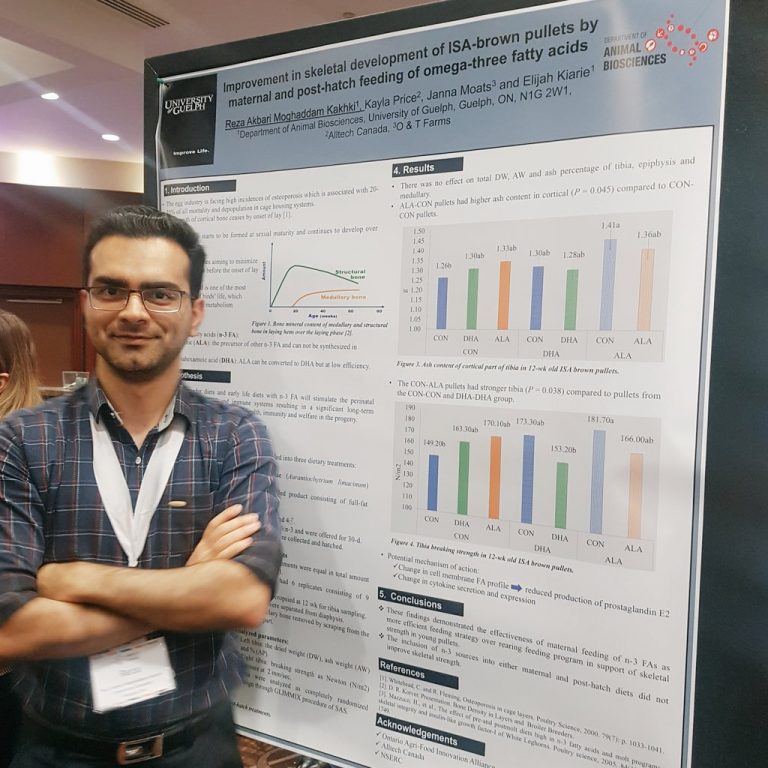
Results from this study reported increased tibia breaking strength and cortical ash content in 12-week old shaver white pullets when the breeder diets contained linPRO at 2.6% of the diet.

 “The results demonstrated effectiveness of maternal and post-hatch feeding of omega-3 fatty acid in support of skeletal strength in young pullets which can greatly reduce poor egg shell quality and skeletal maladies seen in laying hens across all housing types.The potential of omega-3 fatty acids in stimulating bone, brain, and immune cells development at embryonic through to early phases of the chick’s life could significantly improve productivity and welfare.”

– Dr. Elijah Kiarie, Assistant Professor in Poultry Nutrition at the University of Guelph

At 18 weeks of age, there was no reported increase in tibia breaking strength when comparing pullets fed a control diet and originating from either a linPRO fed maternal hen or a control fed maternal hen. However, an 8% increase was observed in pullets fed linPRO compared to pullets fed the control diet. These results were further improved when the pullets fed linPRO originated from breeder hens who were also fed linPRO.

Based on the data reported in this study, it was concluded that feeding omega-3 fatty acids to both breeders and progeny was an effective feeding strategy in supporting structural bone in Shaver White pullets.


Complete details of this study have been published in Poultry Science and are available online through the following citation link: https://doi.org/10.1016/j.psj.2019.12.016

 Last Updated: May 20, 2020

Share:

Apr 2020

Developmental programming has the greatest application potential for modern chicken production to help meet changing and growing global market demands.

The concept of developmental programing refers to the ability of specific exposures during pre- and early life to result in epigenetic changes that may impact the development, health and production potential of the offspring.

For example, the availability of a specific nutrient in chicken feed – such as omega-3 fatty acids – can result in profound trans-generational effects on the production potential and health of the progeny.

Understanding the implications of these exposures will support the advancement and sustainability of modern poultry production practices.

In collaboration with the University of Guelph’s Dr. Elijah Kiarie, O&T Farms is supporting a series of research studies that investigate the impact of feeding linPRO, as a source of omega-3 fatty acids, to broiler breeders and the subsequent impact on progeny performance.

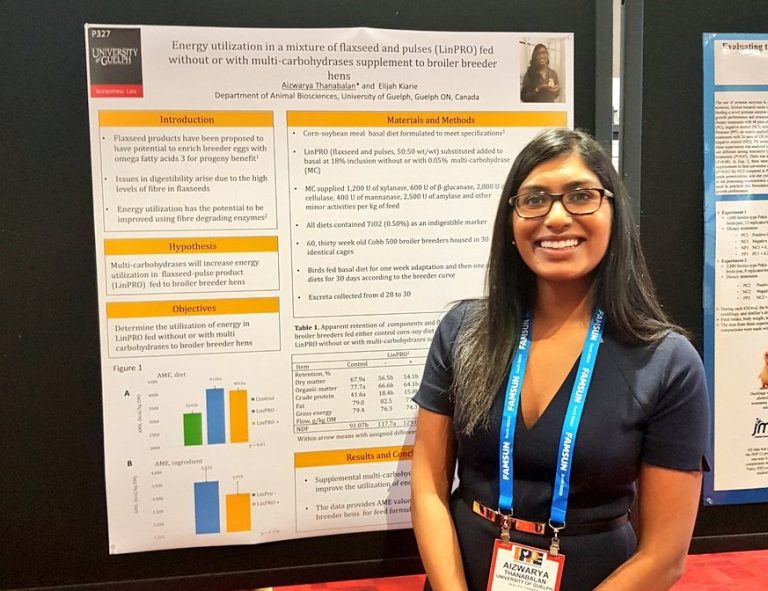
 1. Effects of Feeding Broiler Breeder Hens linPRO with or without a Multienzyme Supplement

The quality of broiler breeder nutrition has the ability to influence chick quality and growth performance, with dietary lipid sources being of particular importance. Dietary fat components within a broiler breeder’s diet influence the fatty acid composition of the egg yolk. These fatty acids play an essential role in prenatal and postnatal development of the chick. Because omega-3 fatty acids play a role in membrane and immune system development, there is growing interest towards increasing yolk concentration of these fatty acids to support chick development.

Although linPRO is commonly used in both commercial layer and broiler operations as a source of dietary omega-3 fatty acids, the nutritive value of this flaxseed-based feed ingredient for broiler breeders had not yet been established. Traditionally, broiler breeder hens are restricted fed to control their predisposition for rapid growth which can result in different digestion capabilities compared to ad libitum fed birds. To ensure accurate feed formulations and to better predict omega-3 deposition into the egg, it was necessary to determine the nutritive value of linPRO in broiler breeder hens.

The objective of this study was to evaluate the effects of feeding linPRO to broiler breeder hens on the nutrient utilization and enrichment of yolk with omega-3 fatty acids.

Results from this study reported maintained egg weights with increased levels of the fatty acids ALA and DHA in the egg yolk of hens fed the linPRO product. These data suggest a high capacity of broiler breeders to convert ALA to very long chain omega-3 fatty acids such as DHA.

The broiler birds fed the linPRO product showed improve apparent metabolizable entery despite lower retained dry matter and protein, compared to the control diet. Additionally, the addition of multienzyme supplement to the linPRO diet did not influence nutrient utilization or fatty acid deposition into the yolk.

Complete details of this study have been published in Poultry Science and are available online through the following citation link: https://doi.org/10.1016/j.psj.2019.12.062

 2.Trans-generational Impact of Dietary Omega-3 Fatty Acids on Growth Performance and Breast Yield in Broiler Chickens

A common challenge among hatching egg producers is developing strategies to improve the performance and yields of chicks from younger breeder hens. Dietary lipids play an essential role in perinatal growth and development, enriching broiler breeder diets with functional omega-3 fatty acids may improve chick quality and growth performance.Therefore, feeding linPRO as a source of omega-3 fatty acids to breeder hens may support improved chick performance from younger breeding stock.

The objective of this study was to determine transgenerational impact of feeding linPRO to broiler breeders during either the rearing or laying phase on the subsequent 42-day breast yield of progeny

Results of this study are not yet published; however preliminary data are promising. Initial results from this study reported improve chick weights and progeny breast yield from breeder hens fed a source of omega-3 fatty acids. When linPRO was fed to 34-week old breeder hens during either the rearing or the laying phase, initial chick weights improved by ~5% compared to the control. Furthermore, the overall progeny breast yield from hens fed linPRO during the laying phase increased by ~10% compared to the control over a period of 2 hatches.

For more information on this ongoing researhc initiative, be sure to watch PhD candidate Aizwarya Thanabalan’s internview in the video below. 

As the project continues to progress, more data and updates will be made available on this cite.

Last Updated: April 1, 2020

Share:

Aug 2019

Over the past decade, the benefits of linPRO-R for dairy cattle health and milk production have been demonstrated in controlled research trials; however, commercial data was lacking….until now!

In 2016, O&T Farms collaborated with researchers at the University of California (Davis Campus) on an ambitious project to evaluate the impact of linPRO-R in early and mid-late lactation dairy cow diets under commercial production settings.

Preliminary research with Penn State University and the University of Saskatchewan demonstrated benefits of linPRO-R related to both animal health and production. Furthermore, producers and nutritionists using the product in the field claimed improvements in overall reproductive performance of their dairy herds.

“Since including linPRO-R in the diet of early lactating cows, my clients have observed a significant improvement in animal conception rates.”– Tim Emerson is an independent dairy nutrition consultant who has developed feeding programs that include linPRO-R.

To substantiate these claims, O&T Farms collaborated with Dr. Peter Robinson and Dr Nadia Swanepoel from the University of California, Davis. Robinson and Swanepoel worked directly with larege-scale California dairy producers to execute these trials with the objective of evaluating the impact of feeding linPRO-R to early and mid-late lactating dairy cattle on reproductive performance, milk production and composition, health incidences, milk fatty acid profiles and the overall economic impact for the producer.

After 3 years of intense data collection from > 1, 000 lactating cows,the results are in!

The overall conclusion made by the UC Davis team is that feeding linPRO-R at 2.5% D.M. to early and/or mid-late lactating dairy cattle offers an economic benefit to producers through improved production efficiencies, reduced health incidences and improved maintenance of pregnancy by the animal. Furthermore, increasing the dietary concentration of linPRO-R results in a linear improvement in the omega-3 fatty acid composition of the milk, which could open new market opportunities for value-added products.

For more details on this research click on the links below or contact O&T Farms.

Share:

Jul 2019

O&T Farms collaborated with the University of Saskatchewan and the Saskatchewan Food Industry Development Centre in a multi-disciplinary research project to evaluate the effects of feeding linPRO-R to dairy cattle on the fatty acid profile and sensory characteristics of havarti cheese.

Consumers are increasingly concerned about the food they eat; viewing it not only as a means of nutrition but as a strategy for disease prevention.

Therefore, opportunities exist in the functional feeding of livestock to enhance not only the health and productivity of the animal but for the development of omega-3 enriched food options for consumers.

Identifying effective omega-3 feed ingredients that can be used towards the natural production of functional dairy foods will have a significant impact on agri-food business, dairy industries and consumer availability of essential nutrients.

LinPRO-R is a dry extruded feed ingredient rich in the omega-3 fatty acid alpha-linolenic acid (ALA). The product is commonly fed to dairy cattle to promote animal health and performance; however, the presence of omega-3 fatty acids suggests a potential market opportunity for the development of functional dairy products.

Results show that feeding linPRO-R to dairy cattle can significantly increase the omega-3 fatty acid content of the milk with minimal losses during cheese manufacturing.

Sensory evaluations of havarti cheese made from linPRO-R fed dairy cows indicated that panelists were unable to identify differences in flavour, taste, colour compared to the control cheese.

For more information on this research, click the links below:

Share:

Jun 2019

Developmental programming has the greatest application potential for modern chicken production to help meet changing and growing global market demands.

The concept of developmental programing refers to the ability of specific exposures during pre- and early life to result in epigenetic changes that may impact the development, health and production potential of the offspring.

For example, the availability of a specific nutrient in chicken feed – such as omega-3 fatty acids – can impact embryonic development and result in profound effects on the production potential and health of the progeny later in life.

Understanding the implications of these exposures will provide a valuable tool towards ensuring sustainability and advancement of the poultry industry.

In collaboration with the University of Guelph, O&T Farms has initiated a series of research projects focused on developmental programming in both broiler and pullet breeding stock which are currently in progress.

The objectives of this extensive research initiative include:

1. Evaluate the effects of feeding linPRO in pullet breeder diets on egg enrichment of omega-3 fatty acids, embryonic and pullet skeletal development, progeny productivity, egg quality and bone health in hens.

2. Evaluate the effects of feeding broiler breeders linPRO during rearing and laying on reproductive performance of breeders and the effects on gastrointestinal development of progeny with or without pathogenic challenges

3. Effects of maternal exposure to omega-3 fatty acids on hormonal dynamics and influence on behavioral development post-hatch

Preliminary data on pullet skeletal development were presented at the Animal Nutrition Conference of Canada (ANCC) in Niagara Falls, Ontario (May 15th, 2019), and suggest that the maternal feeding of linPRO can significantly improve skeletal strength in young pullets by nearly 22% compared to the control.

“The results demonstrated effectiveness of maternal and post-hatch feeding of omega-3 fatty acid in support of skeletal strength in young pullets which can greatly reduce poor egg shell quality and skeletal maladies seen in laying hens across all housing types.” said Dr. Elijah Kiarie, Assistant Professor in Poultry Nutrition at the University of Guelph, and primary investigator for this research.

More data will become available within the year with egg enrichment data, and broiler progeny performance data scheduled for presentation at the 2019 Poultry Science Association Annual Meeting in Montreal, Canada this July.

Share:

April, 2019

Amino Acid Digestibility and Apparent Metabolisable Energy of linPRO offers Improved Nutritional Precision for Laying Hens

REGINA, SK., CANADA – O&T Farms Ltd. recently collaborated with researchers from the University of Saskatchewan on a feeding trial to determine amino acid digestibility coefficients and apparent metabolizable energy values (AME) of linPRO in laying hens.

The precision of laying hen nutrition is increasing thanks to improved scientific technology and collaborative efforts between Universities and Industry. It is widely accepted that the nutritional value of dietary proteins for livestock can vary significantly between ingredients due to several factors including processing methods used and the type of animal consuming the feed.

In order to provide accurate nutritional data of O&T Farms’ linPROTM product – specifically for the laying hen industry – a metabolic trial was conducted to determine the apparent ileal digestibility coefficients of key amino acids and to estimate the AME values. The research was conducted at the University of Saskatchewan and was led by Dr. Rex Newkirk. According to Janna Moats, Research and Development Manager at O&T Farms “the data collected from this project will enable precision diet formulating practices in laying hen operations that feed the linPRO product.”

“LinPRO™ is manufactured using a patented dry-extrusion process which minimizes the anti-nutritional factors that may otherwise impact poultry performance, and improves the overall nutrient digestibility for the birds,” says Moats. The product comes as a flowable mash for easy handling and feeding, and overcomes challenges historically associated with on-farm feeding of ground flaxseed or flaxseed oil to poultry, which can cause digestive disturbances in the hen and limit nutrient availably.

Click here to read more about the LinPRO digestibility study.

Contact:

Janna Moats
Research & Development Manager
O&T Farms Ltd.

Email: JannaMoats@otfarms.ca
Cell: (306) 533-4345
Twitter: https://twitter.com/OandTFarms
Facebook: https://www.facebook.com/otfarms

Share:

Animal Scientists from the University of Saskatchewan find that supplementing dairy cow rations with linPRO-R is an effective strategy for increasing the concentration of omega-3 fatty acids in milk while maintaining animal performance.

The human health benefits of omega-3 fatty acids are well recognized by health professionals and consumers. These fatty acids have been suggested to improve cardiovascular health, reduce inflammation and protect against certain forms of cancer. Unfortunately, the diet of most North Americans is lacking in these important nutrients. Therefore, increasing consumer access to these nutrients could contribute to the prevention of serious human disease.

Feeding flaxseed-or any form of unsaturated fat- to cattle is complex due to the nature of the animal’s digestive system. The fat must be in a protected form to prevent digestive disturbances in the rumen; however, it must also be in a form that is easily digested in the small intestine so the fats can be incorporated into the milk.

Extrusion processing is a heat treatment that can be applied to oilseeds and has been suggested to provide some protection of the unsaturated fats from the rumen environment and thereby increase omega-3 content in the milk.

To helps address this issue, O&T Farms Ltd. collaborated with the University of Saskatchewan on a study that focused on project increasing the concentration of healthful fats in cow’s milk through dietary means.

The trial was conducted at the University of Saskatchewan’s Rayner Dairy Research and Teaching Facility (Saskatoon, SK.) using unprocessed flaxseed and linPRO-R as the test ingredients to be compared to a control ration.

The results show that the fatty acid composition of the milk was dramatically altered among the flaxseed treatments. Conventional dairy milk contains approximately 0.5% total omega-3 as a percentage of fatty acids and feeding the linPRO-R omega-3 feed ingredient more than double the total omega-3 fatty acid content of milk.

In addition to the increased levels of omega-3s, results of this trial also demonstrated a three-fold increase in another human health related fatty acid, conjugated linoleic acid (CLA) as well as a decrease in the level of saturated fatty acids, when linPRO-R was fed.

Although feeding unsaturated fats, such as those found in flaxseed, may improve the milk for consumers we must also consider the impact these feedings strategies may have on the cow. For this reason, the research included an evaluation of flaxseed products on dry matter intake (DMI), milk yield, milk composition and rumen fermentation characteristics.

Dry matter intake of the animals was similar among all treatments while milk yield tended to increase with the inclusion of flaxseed in the diet, especially if that flaxseed was in the form of linPRO-R. Additionally, linPRO-R resulted improvemed feed efficiency and maintained milk components. Rumen fermentation characteristics were also evaluated with no observed differences between treatments.

The successful supplementation of flaxseed in a cow’s diet appears to largely depend on the form in which it is fed. Based on these findings, it was concluded that feeding linPRO-R to dairy cattle is an effective strategy for increasing omega-3 fatty acids in the milk while maintaining production within high performance dairy cattle.

Results of this research garnered acclaim at the 2015 American Dairy Science Association Annual Meetings having placed 2nd in the graduate student poster presentation and 1st in the ADSA graduate student 3-mintute thesis competitions.

The award-winning poster is shown here and details the all-natural omega-3 opportunities available for dairy producers and processors.

To read the complete M.Sc. thesis related to this study, visit the University of Saskatchewan’s e-commons webpage.

Share:

February, 2019

The Agriculture and Agri-Food Canada Lacombe Research and Development Centre research feedlot feeding strategies desigened to improve the nutritional value of beef products for consumers.

Advances in nutritional sciences have allowed for a better understanding of how individual fatty acids affect human health. This knowledge has inspired Animal Scientists to focus on improving the fatty acid profile of meat by adjusting animal diets. The Agriculture and Agri-Food Canada Lacombe Research and Development Centre is contributing to progress in this area through their innovative beef research program, and a current focus is on developing linPRO-R feeding strategies to optimize levels of healthful fatty acids in beef.

Increasing healthful fatty acids, such as omega-3s, is of interest due to their many health benefits (i.e. improved cardiovascular health and anti-inflammatory properties). In addition to omega-3s, feeding flaxseed products to cattle can increase levels of other fatty acids, such as rumenic and vaccenic acids, which may have roles in prevention of a number of diseases from cancer and cardiovascular disease to diabetes.

When feeding flaxseed products to cattle, rumen microorganisms can change the structure of polyunsaturated fatty acids through a process known as biohydrogenation. This process includes the production of both rumenic and vaccenic acids as intermediates. Consequently, goals for developing linPRO-R feeding strategies include optimizing levels of rumenic and vaccenic and omega-3 fatty acids leaving the rumen for incorporation into animal tissues.

Previous work conducted by the Lacombe Research and Development Centre feeding cattle total mixed rations containing flaxseed resulted in variable beef fatty acid compositions. An important observation was that when cattle sorted and ate feedstuffs separately, higher levels of healthful fatty acids in beef appeared to be found. This inspired Dr. Mike Dugan and his research team to investigate different feeding strategies designed to optimize beef fatty acid composition. In their current study, they are trying to determine if feeding linPRO-R mixed with hay (TMR) or feeding it before hay (non-TMR) will affect beef fatty acid composition. At the halfway point of the trial, blood fatty acid profiles were measured as an indicator of what might be going on the in the meat. Results showed a 65% increase in blood vaccenic acid when steers were fed linPRO-R before hay (Figure 1). These findings imply that feeding linPRO-R prior to hay might be a good strategy for improving the nutritional value of beef. Based on this information, it becomes clear that the nutritional value of beef is not only affected by what the cattle eat but also how they eat it.

This research is paving the way to developing successful animal feeding strategies that maximize omega-3 fatty acids and other healthful fatty acids available in beef. The preliminary (112 day) results are now in press in the Canadian Journal of Animal Science. Further work is currently underway looking at effects on beef quality, beef composition and what subsequent impacts beef fat may have on human health.

This research is being conducted at the Agriculture and Agri-Food Canada Lacombe Research and Development Centre and was funded by the Alberta Meat and Livestock Agency. O&T Farms Ltd. provided linPRO-R for the trial. For more information on this and other research supported by O&T Farms Ltd., please contact the main office by following this link.

Share:

Research Abstract

METABOLISM AND NUTRITION

Authors :

P.A. Thacker, B.P. Willing & V.J. Racz (University of Saskatchewan)

Purpose :

  • To determine the potential of various combinations of flax, canola and peas to replace soybean meal in diets fed to broiler chicks.
  • To determine whether the extrusion process is beneficial in improving the nutritive value of these protein sources.

Methodology :

  • 210 1-day old, male broiler chicks were randomly assigned to one of seven dietary treatments for 21-days.
  • Control diet was based on wheat and soybean meal, while the six experimental diets contained 25% extruded or non-extruded combinations of flax and peas (LinPRO), canola and peas (ExtraPRO), or canola, flax and peas (FlexiPRO), added at the expense of the wheat and soybean meal.
  • Chromic oxide was added to all diets as a digestibility marker.

Results :

  • In comparison with the soybean meal diet, digestibility coefficients of dry matter were significantly lower for all diets containing either 25% extruded LinPRO, ExtraPRO and FlexiPRO, or the non-extruded components that make up these products.
  • Digestibility coefficients for energy and protein followed a similar trend except that extrusion significantly improved the digestibility coefficients for dry matter, crude protein and gross energy for LinPRO and ExtraPRO.
  • All three products depressed feed conversion, but the depression was overcome with extrusion. There was no effect on feed intake and weight gain did not differ significantly, except when raw LinPRO was fed.

Conclusion :

  • Extrusion significantly increased digestibility coefficients for dry matter and energy and resulted in significant improvements in feed conversion.
Share: